My January discoveries
Tertulia, vol. 82

Hola. This is Barbara, your guide to the latest cultural news from the Spanish-speaking world. So, here’s what I found in the first month of 2026 - some things new, some things old, all worth being remembered.
The Carmen Mola of the Spanish Baroque?
In the world of Baroque literature, María de Zayas is one of the few women writers mentioned. Forgotten for centuries because the Inquisition forbade her writings, she is today celebrated as a pioneering writer. She has been praised for her exploration of women’s experiences and critiques of societal norms. Maria de Zayas is known for her collection of short stories, Novelas amorosas y ejemplares (Romantic and exemplary novellas, 1637) and Desengaños amorosos (Romantic heartbreaks, 1647), which challenge the patriarchal structures of her time. Her writing style and themes have led many scholars to hail her as a feminist icon, a woman who dared to speak out against the injustices faced by women in the 17th century.
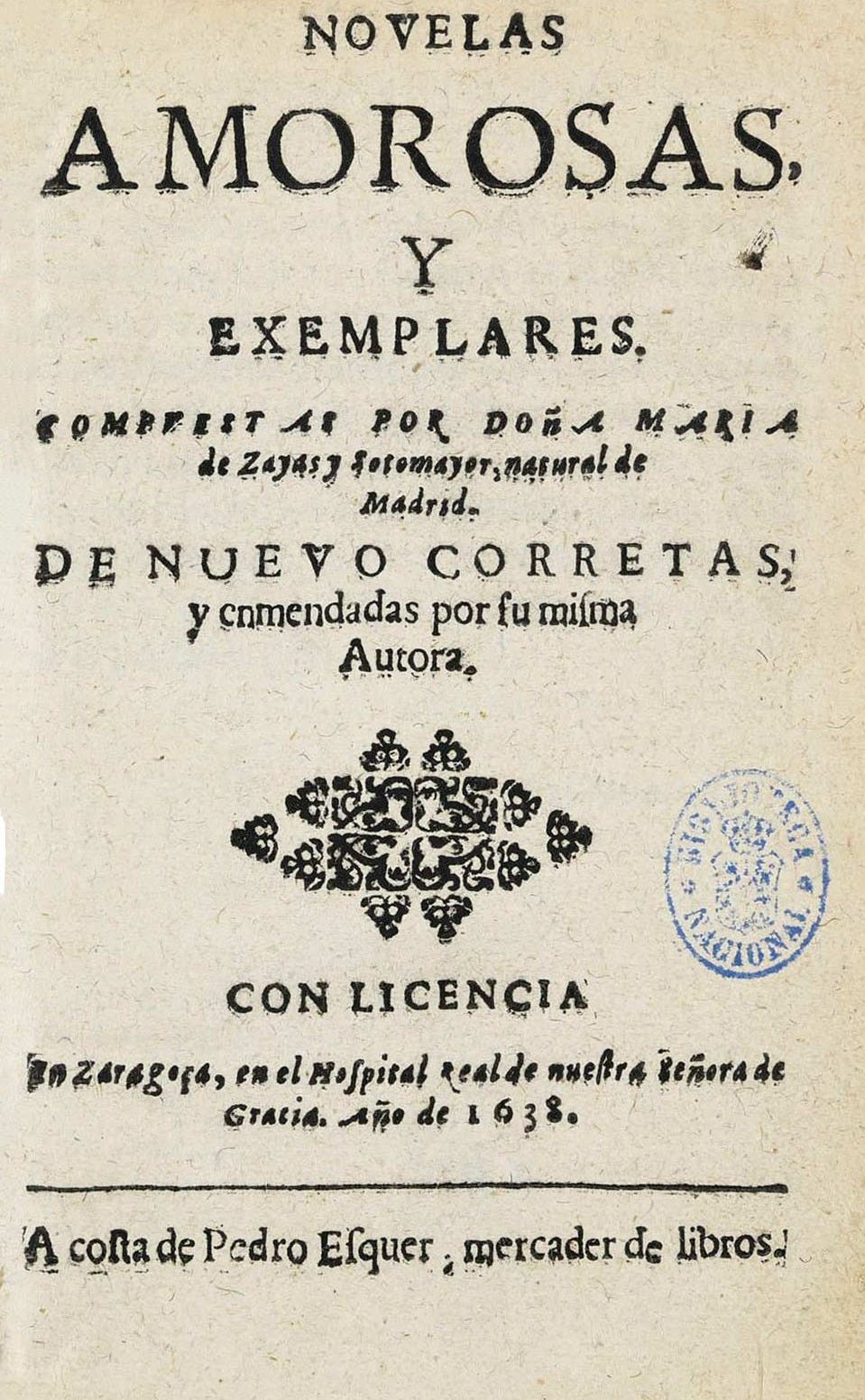
I encountered her name and works recently through the blog Relatos de la historia, which immediately sparked my interest in her writings. Of course, I thought by myself that if she were such a feminist writer, the authors of Las hijas de Felipe would have mentioned her in their podcast, and, indeed, there is an episode about her. In addition, I found some of her stories getting televised in the archive of RTVE as part of the program El jardín de Venus (The Garden of Venus).
I was then surprised to learn during my research that there are doubts about the very existence of María de Zayas. The renowned Spanish philologist Rosa Navarro Durán argues that de Zayas may have been a heteronym, a fictional persona, created by writer Alonso de Castillo Solórzano (Rosa Navarro Durán. María de Zayas y otros heterónimos de Castillo Solórzano. Barcelona: Universitat de Barcelona, 2019. 123 pp.). She bases her claim on several pieces of evidence.
Despite extensive research, Navarro Durán has found no concrete biographical information about María de Zayas. This absence of personal details is unusual for a well-known author of the time. It’s true: except for a date of baptism, very little is known about her.
Navarro Durán argues that the writing style and themes in Zayas’ works are more consistent with those of Alonso de Castillo Solórzano. However, this could also be explained by imitation/emulation as an art form.
Navarro Durán suggests that the idea of a woman writing such bold (i.e. vulgar) and critical works in the 17th century would have been highly unusual. Therefore, she claims that a male author might have used a female name to explore controversial topics more freely.
The debate has not been settled to further clarify the origin of the texts; a comprehensive style analysis could be conducted to verify authorship. This is where artificial intelligence might actually help to recognise patterns and pattern differences that escape us as human readers. By examining syntax, vocabulary, and thematic consistencies, we might gain more insight into the true authorship of the works attributed to de Zayas.
Regardless of who penned the works attributed to her, we should rather ask ourselves if stories deserve praise for their enduring themes and literary merit or because of their author. Isn’t it the power of the narrative and the messages conveyed that should be celebrated, not solely the identity of the author? If the works attributed to Maria de Zayas were indeed written by Alonso de Castillo Solórzano, the narrative itself remains a powerful exploration of women's experiences and societal critiques. Even though it was a case of appropriation of female identity, it would give us subversive insights into taboo topics and feminine oppression of the epoch.
Film: María, llena eres de gracia
Not long ago, I watched the 2004 Colombian film María, llena eres de gracia (Maria, full of grace). The film follows the 17-year-old girl María Alvarez, who becomes a drug mule. At the beginning of the film, we learn that she faces a harsh reality working in a flower plant in the Colombian highlands to support her family. After the decision to quit her job because she felt treated badly, she finds herself pregnant and goes to Bogotá to find a job. Desperate for opportunities, she takes a risky path that leads her to New York, carrying pellets of cocaine in her stomach. In New York, she encounters unexpected challenges and dangers, forcing her to make tough choices.
The movie is about a young woman’s journey to a better life, so typical of many like her from the lower classes in Colombia. I have met some of them on my flights to and from Colombia. It is terrible to see that crime seems to be the best way out of poverty. The film is filled with suspense, emotion and good twists. I especially liked Catalina Sandino Moreno’s performance as María: witty, sometimes desperate, but never losing her courage. With good reason, she won the Silver Bear for Best Leading Actress at the Berlinale and was also nominated for the Oscars. Here’s the trailer:
Cantata boliviana: Exile composition gets its German premiere
On 27 January 2026, the day commemorating the liberation of Auschwitz, an extraordinary work of remembrance and gratitude will be performed in Lübeck: The Cantata boliviana – composed in 1941 by Jewish musician Erich ‘Erck’ Eisner, who was forced to flee to South America to escape Nazi persecution. In exile, he founded the National Symphony Orchestra of Bolivia and dedicated this colourful hymn of praise to his country of refuge – a combination of European compositional tradition and Latin American sounds, touching and full of hope. The lyrics are based on a poem by renowned Bolivian poet and writer, Yolanda Bedregal de Conitzer.
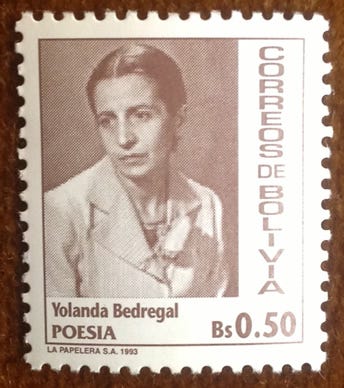
Now, more than 80 years after its creation, the work is returning to Germany for the first time. Since most of us won’t be able to attend the concert in Lübeck I looked for an earlier recording of the work. Apparently, there’s no recording of the piece available on CD or on Spotify. I found one extract on YouTube that did not convince me because it sounded too pompous and patriotic for my ears, but I understand the gratitude that inspired it in 1941.
Let me know if you can locate a full version of the Cantata boliviana somewhere else. I am happy to share it with you all.
This is all for today. I’ll be back next month. Please, share widely with all people interested in my topics. Thank you and muchas gracias por tu tiempo.