Eichmann in Buenos Aires
Tertulia, vol. 86

Hola. This is Barbara, your guide to the latest cultural news from the Spanish-speaking world. On this very day, 66 years ago, former SS-Obersturmbannführer Adolf Eichmann was captured on his way back home from work in Buenos Aires, and then taken to Israel, where he was brought to trial and sentenced to death by hanging.
I read Ariel Magnus’s fictionalised biography about Adolf Eichmann’s life in Argentina over the Easter weekend. It’s titled El desafortunado (The Unlucky One), and the Spanish edition was published in 2020 by SeixBarral. It’s a daunting read, but worthwhile.
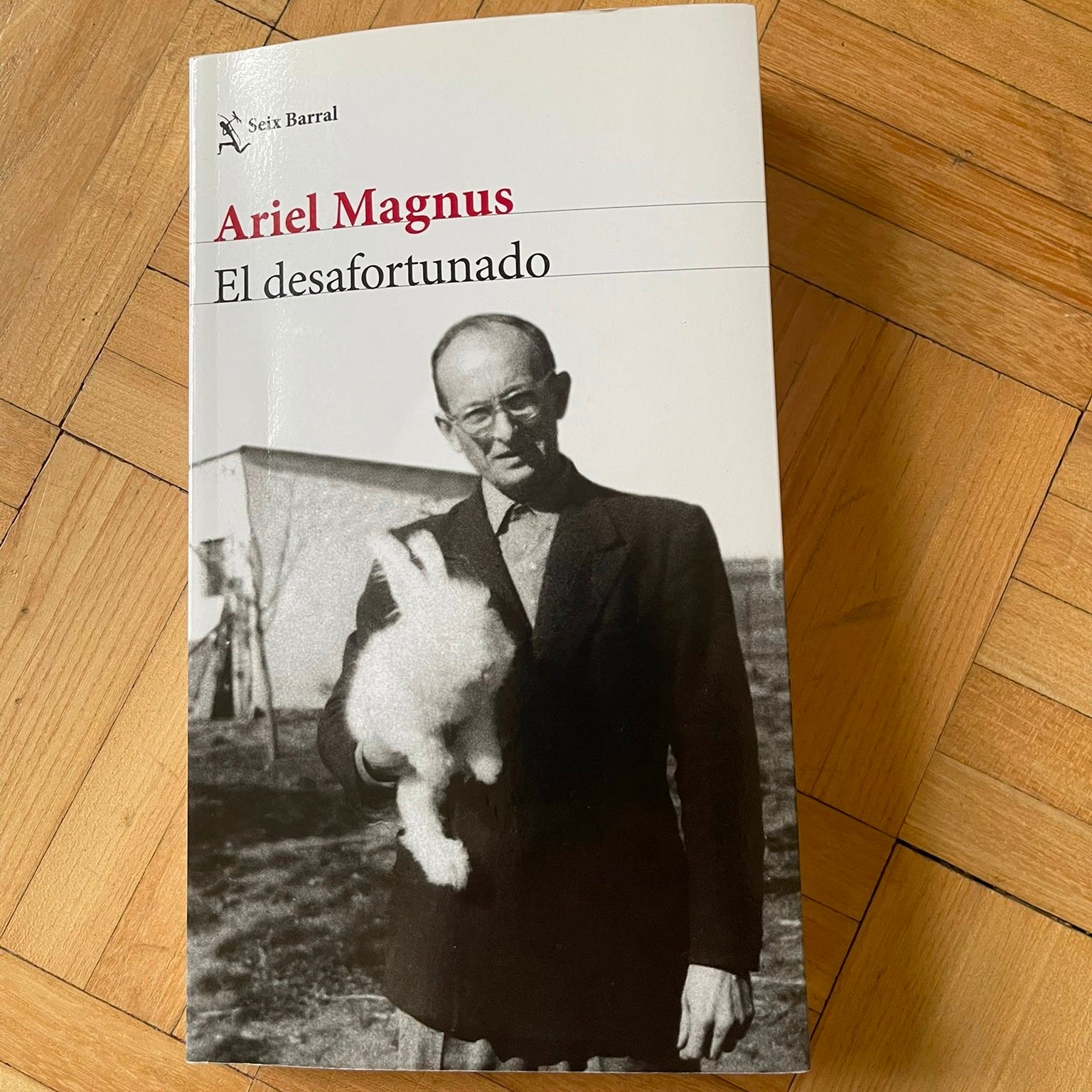
Here’s my review:
Summary of what happens
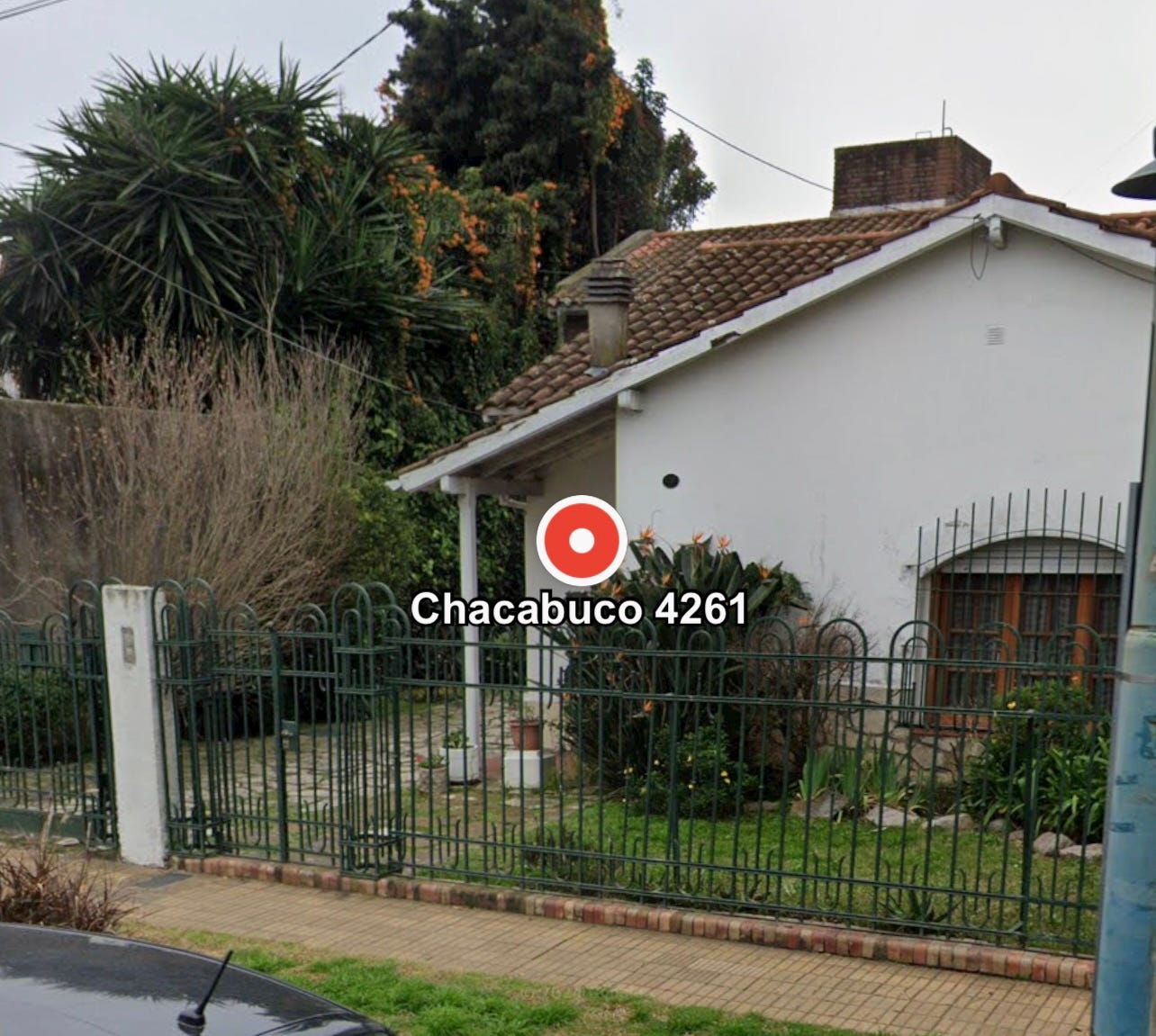
The novel covers the 10 years of Eichmann’s secret life in Argentina. He lives there under the pseudonym of Ricardo Klement. The text starts with the arrival of his wife and their 3 sons, Klaus, Dieter, and Horst, and ends with his capture by the Mossad on May 11th 1960 and the days following. As a matter of fact, nothing much happens in the novel because Eichmann had to live cautiously and unremarkably. Emphasis is instead put on his reflections on life, political ambitions, and ideological beliefs.
The text includes a final section, «Fuentes» (Sources), in which the narrator explains his motivation and the sources he used for this fictionalised biography about one of the most terrible war criminals of all time.
Analysis: «an extraordinarily unlikeable person»
It is very hard to read the novel. Nevertheless, I recommend it since it is important to prevent people like Eichmann from regaining power again, anywhere and anytime. First of all, the novel is challenging for linguistic reasons. The narrator masterfully imitates Eichmann’s original style, which sounds convoluted and bureaucratic. As the narrator points out in the section «Fuentes», he uses transcripts of interviews with Eichmann, further testimonies and the manuscript of Eichmann’s planned autobiography as sources. He thereby lets us look into the brain of a mediocre mind that thinks of himself as somebody special. Secondly, this mind produces horrific thoughts revealing his antisemitic and inhuman conception of the world. The narrator describes what Eichmann thinks when he looks at his surroundings as a way of scrutinising the world. This is hard to swallow, even more so since the overall style of the novel is very dry and numb. Here’s an example of Eichmann’s train of thought. This is not for the faint-hearted, so please skip the appalling passage if you wish. Nevertheless, I think Eichmann’s thoughts of self-justification are an appalling example of how evil can work in humans:
De lo único que estaba arrepentido, prosiguió, era de no haber terminado con su trabajo. Si realmente hubieran matado a los 10,3 millones de judíos de los que hablaba el reporte que Korheer había hecho en 1943 para Himmler, entonces hubiera podido decirse que habían liberado de la tarea a las generaciones futuras, que nacerían en una Europa purificada para siempre de los apátridas chupasangre. Lamentablemente, ese objetivo no se había cumplido, porque peleaban contra un enemigo que con sus miles de años de instrucción y entrenamiento resultaba intelectualmente superior a ellos. (p. 188-189, in the edition from 2020)
Translation: The only thing he regretted, he continued, was not having finished the job. If they had truly killed the 10.3 million Jews mentioned in the report Korheer had compiled for Himmler in 1943, then it could have been said that they had relieved future generations of the task, generations who would be born into a Europe forever cleansed of those stateless bloodsuckers. Unfortunately, that objective had not been achieved because they were fighting an enemy who, with his thousands of years of education and training, was intellectually superior to them.)
The Eichmann of the novel is not just the obedient technocrat that he pretended to be during the trials in Israel, but we get to know a man full of resentments and hatred. He even thinks that Israel should be grateful to him because it owes its very foundation to his deportation and extinction strategies. The notion that those whom these nazis wanted to eliminate are now free, whilst the nazi criminals are on the run, is unbearable. From the perspective of the survivors and victims, this is a moment of light in the novel.
This character depiction is, according to the narrator, based on Bettina Stangneth’s extensive study Eichmann before Jerusalem. Stangneth investigates Eichmann’s life in Argentina to make clear how ideology-driven and reflective Eichmann acted. This is her core thesis, which, of course, stands in contrast to Hannah Arendt’s famous analysis, Eichmann in Jerusalem. A report on the banality of evil (1963).
Moreover, this Eichmann sometimes wavers between megalomania, as we have seen before, and low self-esteem. On the one hand, his low self-esteem is based on economic reasons. This becomes visible when he meets the wealthy doctor Mengele (under the pseudonym Dr Helmut Gregor at that time) at a restaurant. In general, he feels insecure when meeting other nazi collaborators of a higher rank or more wealth. On the other hand, he does not like his own appearance, mostly his ugly teeth and the asymmetric facial features (e.g. p. 53). The fact that he invests part of his first-earned money from a rabbit breeding farm in new teeth also shows his vanity and that he thinks that he deserves better.
Summary and learnings
On a personal level, I was surprised by two character details that have kept my mind busy.
What truly surprised me is the near-total absence of records about Vera Eichmann’s life after her husband was hanged. I wanted to learn more about Vhis wife. She is a minor character in the novel, so I tried to do an inquiry. As I learned from Wikipedia, she returned to Germany after Eichmann’s execution. It is not officially known where she lived or where she is buried. In Argentina, she provided cover for him while he publicly posed as her brother rather than her husband. She lived until 1997. I find it impossible to imagine living with such a moral burden. This silence around her is amazing. Why did journalists and historians largely ignore her story? Is it perhaps because post-war Germany preferred to forget?
I was also startled to discover that Saskia Sassen, a world-famous and left-leaning sociologist of globalisation and international migration whom I greatly respect, is connected to this dark history through her father. She is the daughter of the journalist and Dutch nazi collaborator Wilhelm Sassen. He had to leave Europe, too, to avoid being tried for war crimes. His daughter, Saskia, was born in Buenos Aires in 1947. Sassen organised regular gatherings at his home in Buenos Aires, in which Eichmann also participated. During these occasions, Eichmann’s revealing testimonies were recorded. Sassen and Eichmann planned to make money from Eichmann’s future autobiography, but Israel’s Mossad prevented this by capturing him. Here’s the passage in which Saskia Sassen is mentioned:
Le abrió la puerta la hija de Sassen, Saskia, una damisela de diez años que siempre lo recibía con un vestidito impecable y extendiéndole la mano con toda formalidad, se veía que el padre le había enseñado que ese hombre que había conocido en Zur Eiche y que ahora los visitaba todos los findes de semana era una persona importante (p. 185).
Translation: The door was opened by Sassen’s daughter, Saskia, a ten-year-old girl who always greeted him in an immaculate little dress, extending her hand with the utmost formality; it was clear that her father had taught her that this man, whom he had met at Zur Eiche [a German restaurant in Buenos Aires, remark B.B.] and who now visited them every weekend, was an important person.
Sassen talked about her memories of these weekend gatherings with the BBC. Sassen remembers Eichmann as a “ most extraordinarily unlikeable person”. Her social circle in New York criticised her for not speaking openly and earlier about her father’s SS membership (cf. Hannes Stein: Sonntags kam Eichmann. In: Die Welt. 13. Dezember 2014, S. 23).
Again, in her case, I was asking myself what it means to live with such a moral burden, even if you, as a child, are personally not responsible for it. What does it mean today to be somebody whose father (or grandparent to include the younger generations) collaborated with nazis and shared their ideology?
Well, that’s a question many Germans are currently, again, investigating because the US National Archives catalogue has recently put the NSDAP membership cards online. They are wondering what their grandparents were doing during the nazi time because in many homes it is still a taboo topic. Others are even interested in downplaying this part of German history as «bird shit». Don’t let them prevail. It’s important not to downplay or suppress this knowledge so we can prevent similar atrocities from happening again.
Overall, the novel is rather instructive and of psychological interest than entertaining. However, I really like the way Magnus depicts Eichmann. For the grandson of someone who survived the Holocaust, it must have been a very difficult task to use his imagination to bring the thoughts of Eichmann back to life. I am thankful to him for this psychogram of Eichmann. Although most of us know about Eichmann’s life as “architect of the Holocaust” from history lessons and summaries of Hannah Arendt’s famous book, many know very little about how he coped with life once bereaved of power, and many believe his tale that he was just following orders from above. Following Stangneth’s thesis, Magnus shows us that this tale is not true. He was not a simple, obedient follower. Eichmann invented these orders, brought them to execution, and justified them until his end.
I’ll be back in a couple of weeks.